


What is Polysaccharide Molecular Weight?
Polysaccharide molecular weight refers to the size of the polymer chains that constitute these complex carbohydrates. Rather than a single value, polysaccharides typically display a distribution of molecular weights, reflecting their inherent structural diversity.
This distribution significantly influences their solubility, viscosity, thermal stability, and interactions in biological or industrial systems. For instance, higher-molecular-weight chains may contribute to gelling or thickening behavior, while lower-molecular-weight fragments may exhibit different functional or bioactive properties.
Understanding and accurately measuring this parameter is essential for:
- Correlating structure with functionality (e.g., rheology, bioactivity)
- Optimizing extraction, degradation, or modification workflows
- Ensuring batch-to-batch consistency in research or manufacturing
- Supporting decisions in food formulation, biomaterials development, or polysaccharide-based therapeutics (for research use only)
What We Measure: From Absolute Mass to Structural Insights
- Absolute molecular weight values: Mw (Weight-average molecular weight), Mn (Number-average molecular weight), Mz (Z-average molecular weight)
- Distribution & polydispersity: Full MW distribution curves, PDI (Polydispersity index = Mw/Mn)
- Conformation & branching: Intrinsic viscosity [η], Mark–Houwink exponent (a), Rg (Radius of gyration) and Rh (Hydrodynamic radius), Branching index (g'), derived via triple-detection GPC
- Hydrodynamic size: Dynamic light scattering (DLS) for particle size and dispersion
- Low-degree oligomers: Accurate mass detection of oligosaccharide fractions via MALDI-TOF MS
Analytical Techniques for Polysaccharide Molecular Weight Determination
SEC-MALS (Size-Exclusion Chromatography with Multi-Angle Light Scattering)
Purpose: Absolute molecular weight measurement without calibration
Best for:
- Novel or complex polysaccharides without available standards
- Samples requiring full molecular weight distribution
Key Advantages:
- Delivers Mw, Mn, Mz and PDI without external calibration
- Paired with refractive index (RI) detector for concentration determination via dn/dc
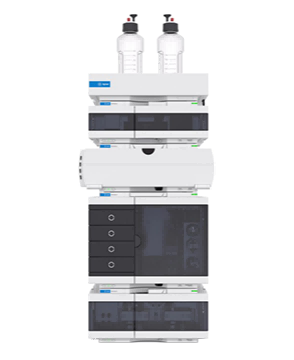
Agilent 1260 Infinity II HPLC
Triple-Detection GPC (RI + MALS + Viscometer)
Purpose: Simultaneous analysis of molecular weight and chain conformation
Best for:
- Studying branching, intrinsic viscosity, and compactness
Outputs include:
- Absolute MW
- Intrinsic viscosity [η], Mark–Houwink a-values, and branching index
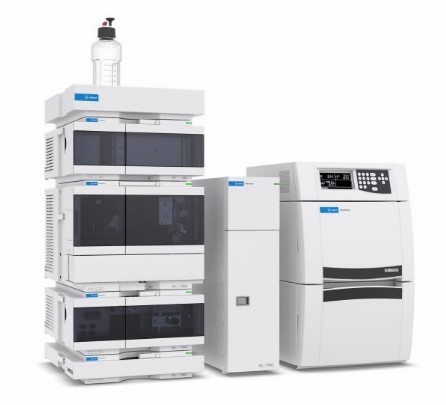
Triple Detection,1260 Infinity II Multidetector GPC/SEC System
MALDI-TOF MS for Low-Molecular-Weight Oligosaccharides
Purpose: Identify and confirm low-molecular-weight polysaccharide fragments not resolved by SEC.
Best for:
- Hydrolysates and degradation products
- Fermentation-derived oligosaccharides
- Functional sugar fractions (DP2–DP10)
Advantages:
- Accurate mass detection without labeling
- Fast analysis of low-DP species
- Complements SEC-MALS for full-range profiling
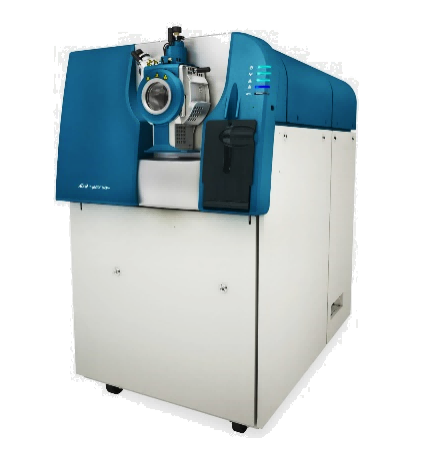
AB SCIEX TOF/TOF™ 5800
Choosing the Right Method for Your Study
| Research Objective | Recommended Method | Instrument Platform | Key Highlights |
|---|---|---|---|
| Absolute molecular weight without calibration | SEC-MALS | Agilent 1260 Infinity II HPLC + MALS detector | True Mw/Mn/Mz and PDI without standards; ideal for novel or heterogeneous samples |
| Conformation, branching, and viscosity characterization | Triple-Detection GPC | Agilent 1260 Infinity II Multidetector GPC/SEC System | Simultaneous measurement of MW, [η], Mark–Houwink a, and branching index (g') |
| Profiling low-MW oligosaccharide fractions (DP2–DP10) | MALDI-TOF MS | AB SCIEX TOF/TOF™ 5800 System | High-resolution mass accuracy; ideal for hydrolysates and functional sugar mapping |
Additional Guidance for Method Selection
- Not sure which method fits?
Our team will assess your sample characteristics (e.g., ionic content, MW range, solubility, source) to recommend the most suitable platform—or a combination of methods. - Multi-platform strategies
For example, SEC-MALS provides full MW distribution, while MALDI-TOF complements it by resolving the low-DP region. Triple-Detection GPC can further reveal chain conformation. - What if my sample aggregates or degrades easily? We adjust the buffer composition and temperature or may suggest AF4-MALS (available upon request) for gentle separation.
Analytical Scope: What Types of Polysaccharides We Analyze
| Category | Representative Polysaccharides |
|---|---|
| Plant-Derived | Pectins, β-Glucans, Starch, Dextrans, Inulin, Konjac Glucomannan, Guar Gum |
| Microbial EPS | Pullulan, Xanthan Gum, Gellan Gum, Levan |
| Algal Polysaccharides | Alginate, Carrageenan, Agar |
| Animal/Biomedical | Hyaluronic Acid (HA), Chitosan, Chitin Derivatives, Chondroitin Sulfate |
| Oligosaccharides & Derivatives | Functional Oligosaccharides, Polysaccharide Hydrolysates |
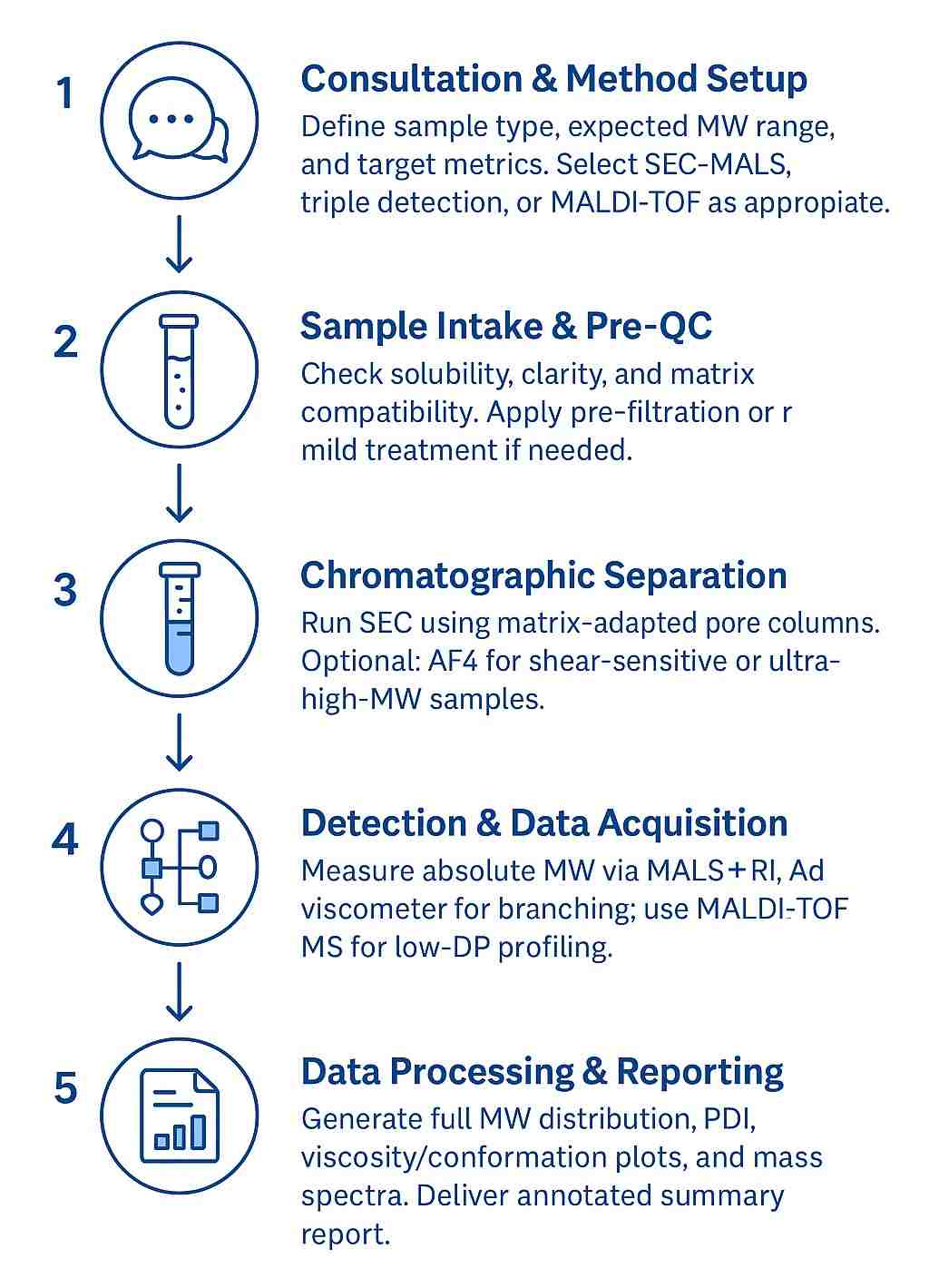
Our Workflow - Step-by-Step Polysaccharide MW Analysis Process
What You Receive: Comprehensive and Interpretable Results
Creative Proteomics provides a structured PDF report with complete figures and tables, suitable for research records, publication support, or technical review.
- Executive summary with key metrics: Mw, Mn, Mz, PDI
- Chromatograms and MW distribution plots (SEC-MALS or GPC)
- Quantitative tables with peak-specific values and replicate statistics
- Mark–Houwink plots or viscosity curves (for triple detection data)
- Annotated MALDI-TOF mass spectra (if applicable)
- Method details: column type, buffer, detector setup, dn/dc
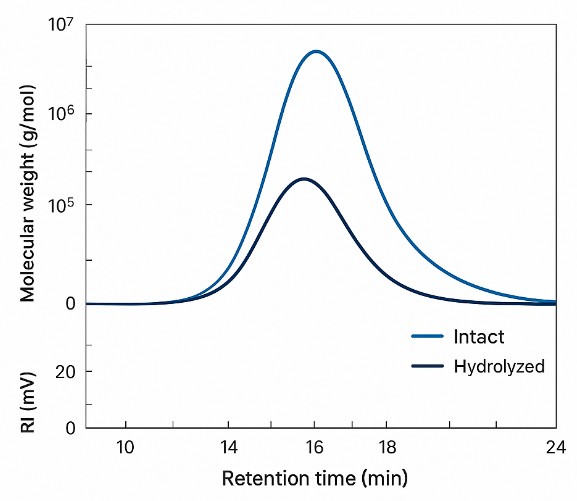
SEC-MALS Molecular Weight Distribution Overlay
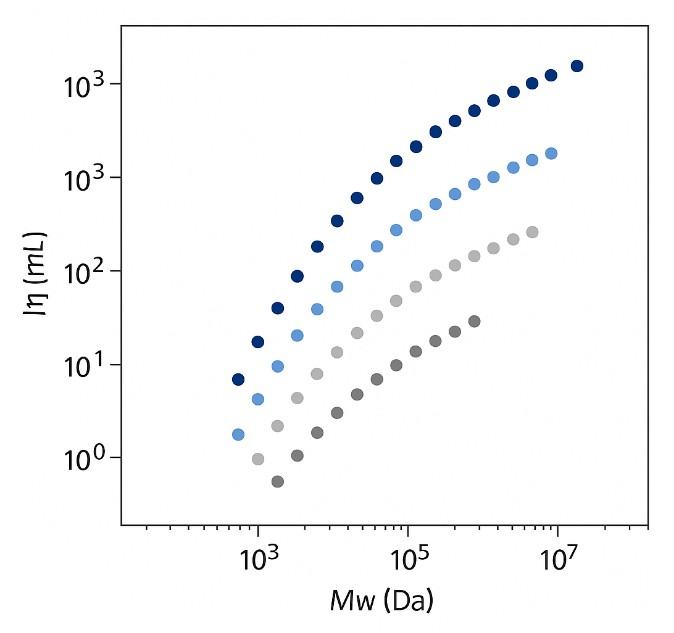
Multi-Sample Mark–Houwink Comparison
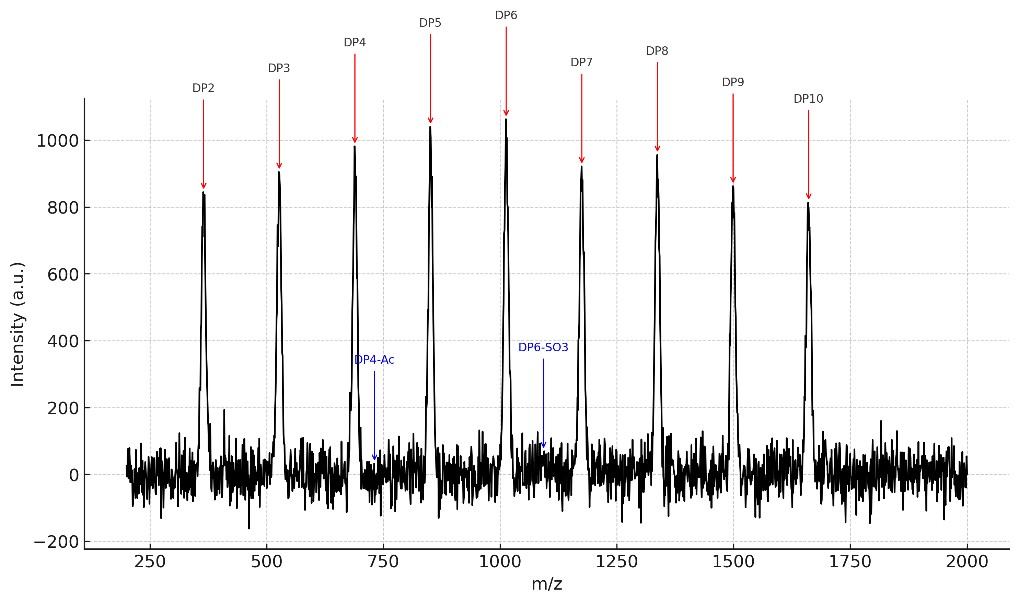
MALDI-TOF MS Oligosaccharide Spectrum
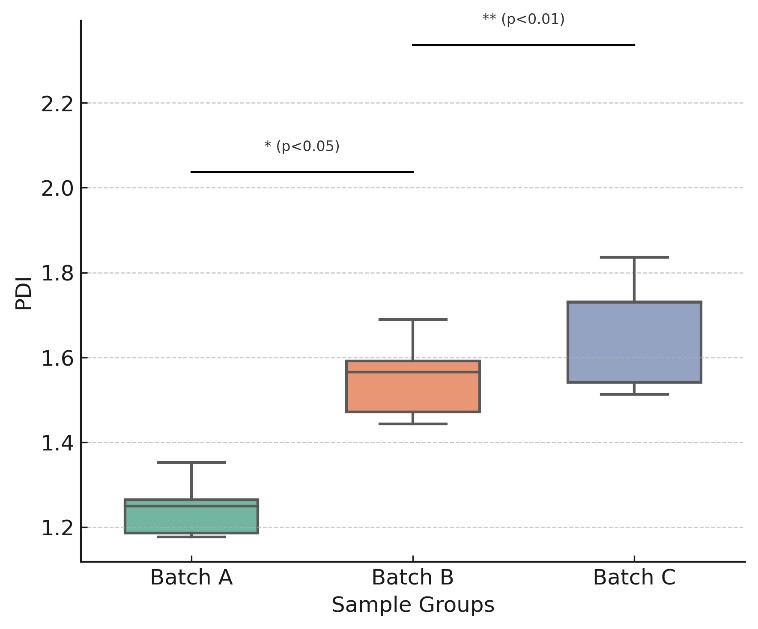
PDI Distribution Comparison (Box Plot)
Quality Control: Research-Grade Data You Can Trust
- Injection precision: Peak area RSD ≤ 5%
- Mass recovery: Expected range 85–115%
- MALS model fitting: χ2 values within instrument specification
- Calibration check (if applicable): Pullulan/dextran R2 and residuals tracked
- System suitability: Baseline, symmetry, peak resolution, and ionic compatibility validated
Sample Requirements: How to Submit Your Polysaccharide Samples
| Category | Requirement / Instruction |
|---|---|
| Sample type | Purified polysaccharides, hydrolyzed fractions, or oligosaccharide-rich extracts. Avoid high protein/lipid contamination. |
| Minimum amount | ≥ 2–5 mg dry powder, or ≥ 1 mL solution at ≥ 2 mg/mL. Contact us if material is limited. |
| Solvent/buffer | Ultrapure water or neutral salt buffer (e.g., 0.1 M NaCl or NaNO₃). Avoid SDS, citrate, or chelators. |
| Solubility check | Ensure complete dissolution. Gentle heating (≤ 50 °C) or mild sonication is acceptable. |
| Filtration | Filter through 0.22–0.45 μm if sample is not shear-sensitive. Indicate if filtration is omitted. |
| Storage before shipping | Store at 4 °C. Avoid freeze–thaw cycles. |
| Shipping conditions | Use leak-proof tubes in cold-pack insulated packaging. Label clearly with sample ID and buffer. |
| Special notes | Inform us if the sample is ionic, branched, acetylated, sulfated, or prone to aggregation/degradation. |
Accurate sample labeling and buffer disclosure will help us select the optimal column and detection parameters. For special sample types, please contact our team prior to shipment.
Applications: Where Molecular Weight Testing Adds Value

Food & Nutrition R&D
Characterize functional polysaccharides; monitor enzymatic breakdown; compare ingredient suppliers

Agricultural Extracts & Botanical Studies
Standardize TCM or herbal preparations by MW-defined fractions

Microbial EPS Research
Link EPS size/conformation to biofilm, viscosity, or fermentation outcomes

Cosmetic & Biomedical Polymers (Research)
Optimize HA/chitosan/alginates for formulation consistency and target performance
FAQs: Common Questions About Polysaccharide MW Testing
Q1. What's the difference between absolute and relative molecular weight?
Absolute MW is determined via light scattering (MALS) and doesn't rely on standards. Relative MW uses calibration curves (e.g., pullulan), which may vary across labs or conditions.
Q2. Why is dn/dc important?
The dn/dc value links refractive index to concentration. It's critical for calculating MW accurately in MALS-based methods.
Q3. What if my sample aggregates or sticks to the column?
We can adjust buffer conditions or switch to AF4, which avoids stationary-phase interaction.
Q4. Can you assess branching or conformation?
Yes. Triple detection GPC provides viscosity and Mark–Houwink plots for chain architecture analysis.
Q5. Can you detect small oligosaccharides?
Yes. MALDI-TOF MS supports analysis of low-MW fractions, especially when paired with SEC for whole-distribution profiling.
Q6. How does molecular weight affect bioactivity?
Even structurally similar polysaccharides can exhibit different functional effects depending on MW range—some active only in low-MW form, others requiring high-MW for gelling or receptor interactions.
Q7. How reproducible are the results across batches?
Our validated workflow includes replicate injections and recovery checks. Relative standard deviation (RSD) for Mw is typically ≤5% under controlled conditions.
Q8. Can different methods be combined for one project?
Yes. SEC-MALS provides full MW distribution, Triple Detection GPC adds conformation insights, and MALDI-TOF resolves low-MW regions. Multi-platform strategies ensure comprehensive coverage.
Q9. What if my polysaccharide is insoluble or highly aggregated?
We optimize buffer composition, ionic strength, or temperature to improve solubility. For strongly aggregating or shear-sensitive samples, AF4-MALS can be considered.
Q10. How do molecular weight results link to polysaccharide bioactivity?
Different MW ranges often correlate with distinct properties such as viscosity, film-forming ability, or functional activity. Our results provide MW-dependent distributions to guide functional research.